
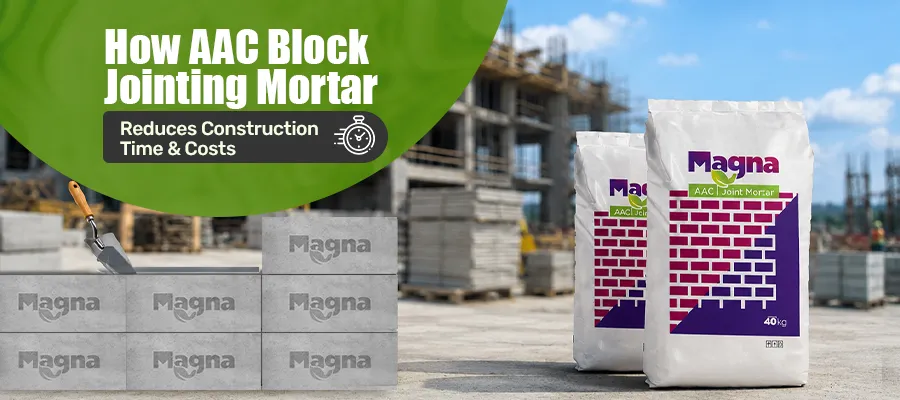
How AAC Block Jointing Mortar Reduces Construction Time and Costs
 July 27, 2026
Autoclaved Aerated Concrete (AAC) blocks have changed how buildings are constructed in India and around the world. They are lightweight, thermally efficient, and accurately made. Today, they have replaced conventional red clay bricks in both residential and commercial applications. However, the efficacy of AAC block construction depends not only on the blocks but also on the materials holding them together. In this regard, AAC block jointing mortar comes in handy as a specialized adhesive.
What Is AAC Block Jointing Mortar?
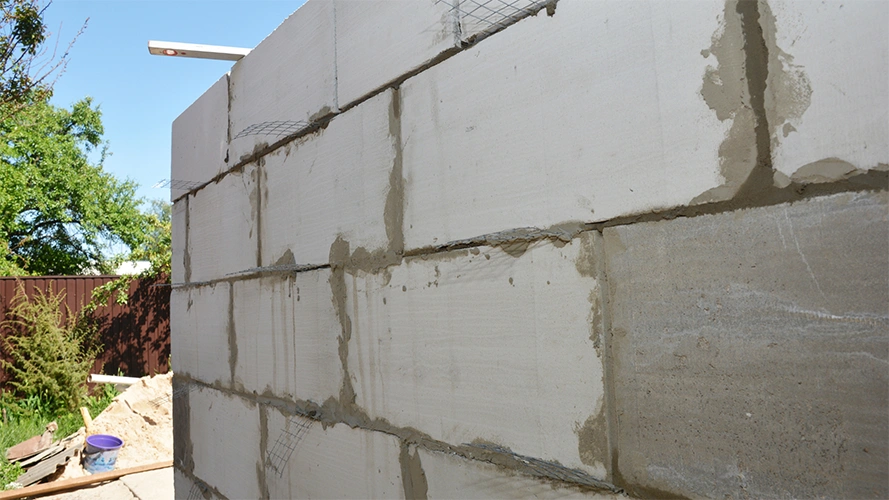
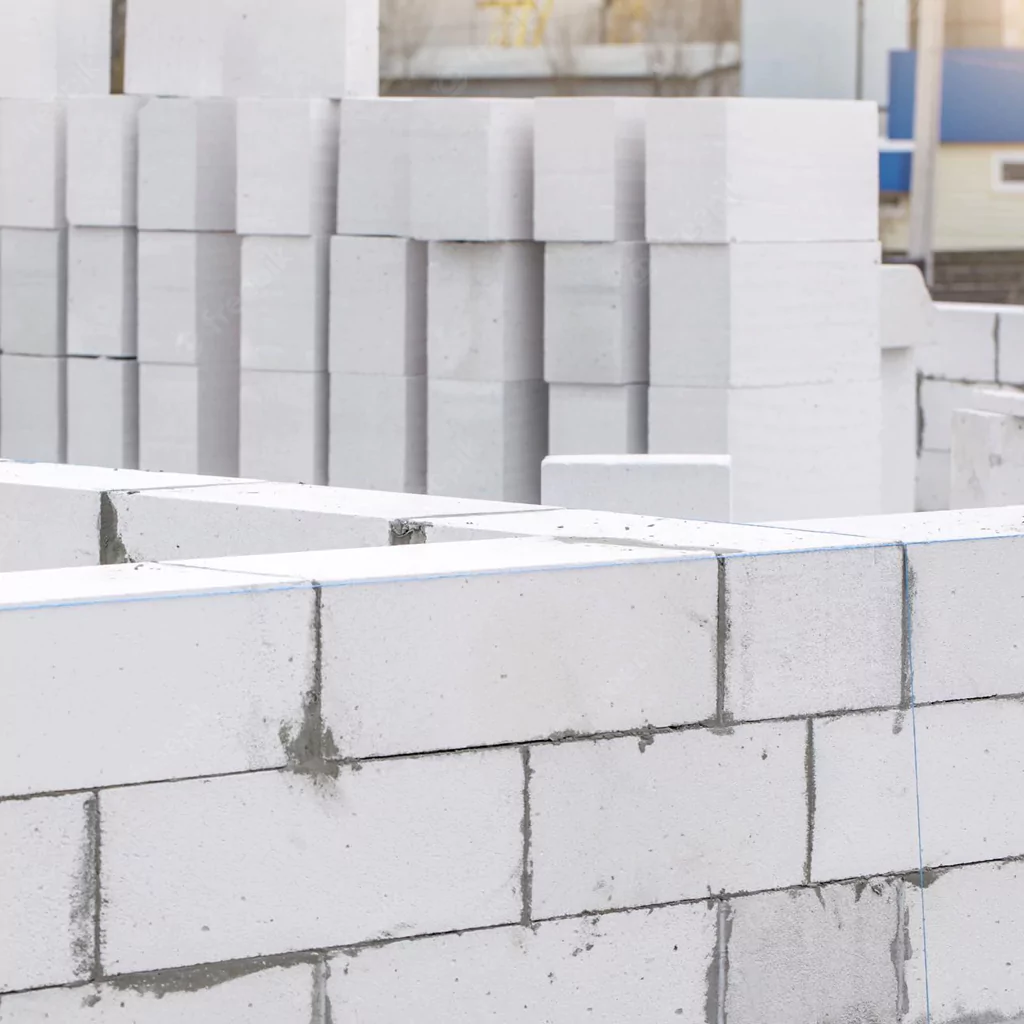
AAC block jointing mortar is a new type of material that has specialized properties compared to regular cement sand mortar. It is a specially engineered mixture based on cement, which makes it easy to lay AAC blocks. Jointing mortars must be applied with a small layer of 2 to 4 mm thickness. In contrast, traditional mortar requires significant layers of 10-12 mm to adhere blocks. This difference in the amount of material inevitably affects the total cost and time for installation.
Fast Construction of Walls
Moreover, jointing mortars are fast-setting, which means that further blocks can be laid earlier, without wasting too much time on unnecessary curing processes. In general, with jointing mortar, masonry works can be performed 2 to 3 times faster than with the use of conventional mortar.
Because AAC block jointing mortar is already mixed, one simply needs to add water at the construction site. Masons do not have to spend time and effort mixing sand and cement, as well as using the right proportions. Thanks to the thin layer application of the jointing mortar, less of it is used for applying to each block.
Lesser Quantity of Material Used
Commonly used mortar joints consume much larger quantities of material as a result of their thick dimensions. In fact, if one calculates the area for a building with a 10 mm thick mortar joint compared to a 3 mm thick joint, it will result in up to 80% and even 90% reduction in amounts of material used. Also, since it is easy to purchase prepackaged jointing mortar according to its square meter coverage, the process has become much easier, and planning becomes less complicated as a result of avoiding wastage.
Less Staff Required and Lower Skills Needed
In the case of conventional mortar, mixing skills are required, and incorrect mixing often results in a weak joint. When jointing mortar is used, the ineffectiveness of workers is reduced. One can follow the instructions of the manufacturer. By adding the specified amount of water, he can mix jointing mortar and prepare it in order to create an even paste. This way, the need for skilled workers is diminished.
More Room Thanks to Reduced Mortar Joints
Having fewer and thinner mortar joints means that there will be more area carpeted in the same construction thickness, and as much wall thickness will be taken up by mortar instead. For builders who have limited land space, it means an increase in usable or sellable area without changing the construction design.
Improved Strength and Reduced Callbacks
The mortar for joints has polymer fibers in its composition that make joints stronger in contrast to ordinary mortars. They help to avoid the appearance of cracks in joints, and this increases the possibility of avoiding expensive renovations in the future. The fewer callbacks there are, the lower the expenses will be borne by the contractors and clients for whom they have built the structure.
Improved Thermal and Acoustic Continuity
AAC blocks are already famous for the thermal insulating qualities that make them effective within the wall. Use of a compatible jointing mortar helps to sustain the thermal insulation performance. Conventional thick mortar joints may lead to thermal bridges that reduce insulation performance at some levels. In contrast, the use of jointing mortar helps keep the joint thickness to a minimum and, thus, improves thermal and acoustic performance.
Conclusion
AAC Block Jointing Mortar represents not just another product type. It provides a significant upgrade to the masonry procedure. By cutting application thickness and making labor simpler, reducing material waste, and enhancing durability, this product solves problems of cost and time in almost every stage of construction. Thus, for builders and constructors who want to make quick and high-quality projects, using AAC blocks with the appropriate jointing mortar is justified and effective at all times.
Recent Posts