
Why to Choose AAC Blocks?
 April 25, 2026
Ask a contractor who switched to AAC blocks why they made the change and you will rarely get a single answer. It is usually a list. The weight. The speed. The fact that the building stays cooler. And somewhere at the end, almost as an afterthought: they have not gone back to traditional bricks after that.
The weight argument
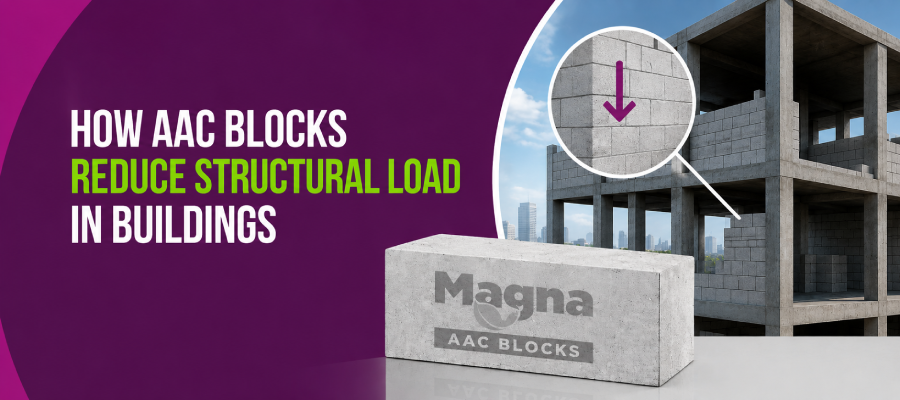
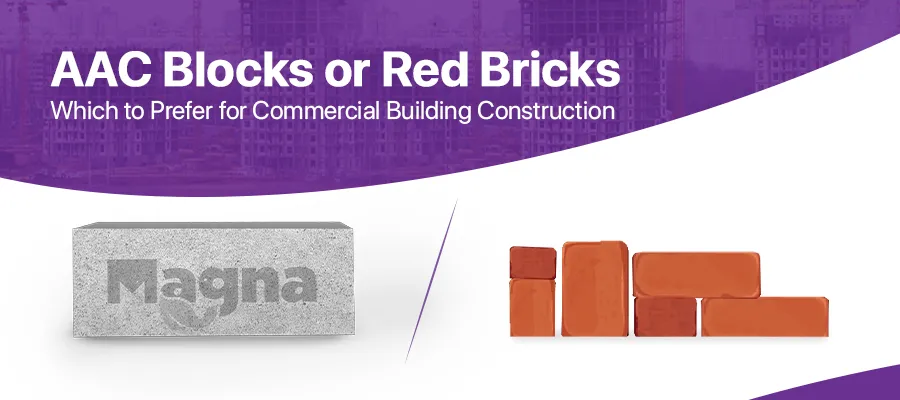
Start with something basic. AAC blocks weigh roughly three times less than conventional red brick. That single fact has consequences that run through the entire project.
A lighter wall means a lighter building. A lighter building puts less pressure on the foundation, which can reduce the amount of steel and concrete needed at the base. On a large residential or commercial project, that saving is not marginal. It shows up clearly in the structural estimate. It also shows up on site, where workers handling lighter blocks move faster.
What happens to heat
Conventional brick acts as a heat absorber and releases heat inside the structure in the evening, causing air conditioners to work much longer than expected.
The AAC blocks are made up of small pockets of air bubbles generated during production. This creates an obstacle for heat transfer in the wall material. Thus, the inner environment of the building is maintained cool without extra insulation. In other words, savings will be reflected in the owner's monthly electric bill.
Strength where it matters most
There is a misconception that lighter means weaker. AAC blocks are manufactured under controlled high-pressure steam conditions, which produces a material that is structurally reliable and performs well under the kind of loads that residential and commercial construction demands.
More importantly, AAC blocks perform well in seismic conditions. The combination of lower dead load and the material's ability to absorb and distribute stress makes it a sensible choice in regions where earthquake resistance is a real consideration rather than a theoretical one. India's seismic zone classifications cover a significant part of the country. Choosing a material that accounts for that is not overcaution. It is responsible building.
Fire and sound without the extras
AAC blocks are non-combustible. They do not catch fire, do not contribute to the spread of flame, and hold their structural integrity under high temperatures for considerably longer than many alternatives. For hospitals, schools, and multi-storey residential buildings, that is a specification that matters both for occupant safety and for satisfying the relevant compliance requirements.
The porous structure that makes the block light and thermally efficient also gives it reasonable acoustic properties. It will not replace specialist acoustic treatment where that is genuinely needed, but for everyday separation between rooms, floors, and adjoining spaces, AAC blocks reduce noise transmission in a way that brick does not always match.
Precision that saves time
Brick’s variability is built into how it is made and fired, and it gets compensated for on site with thick mortar joints and extra finishing work. The compensation costs time and material, and it creates unevenness that travels all the way through to the final coat of plaster.
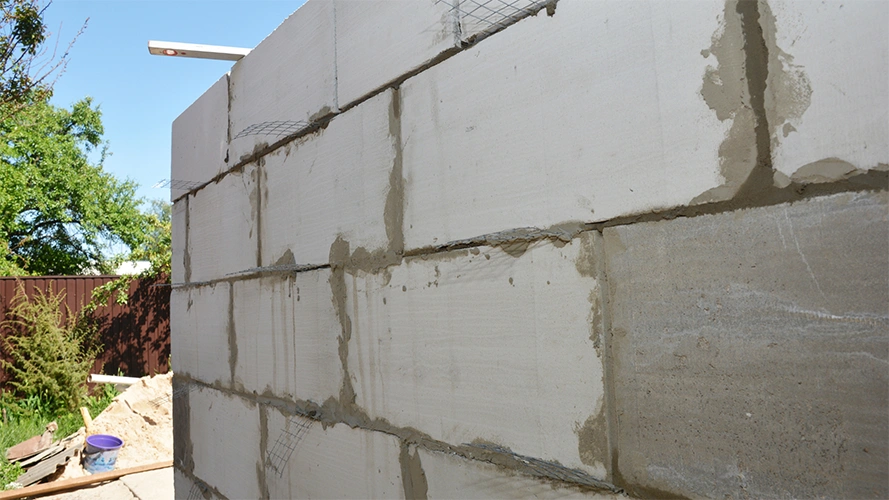
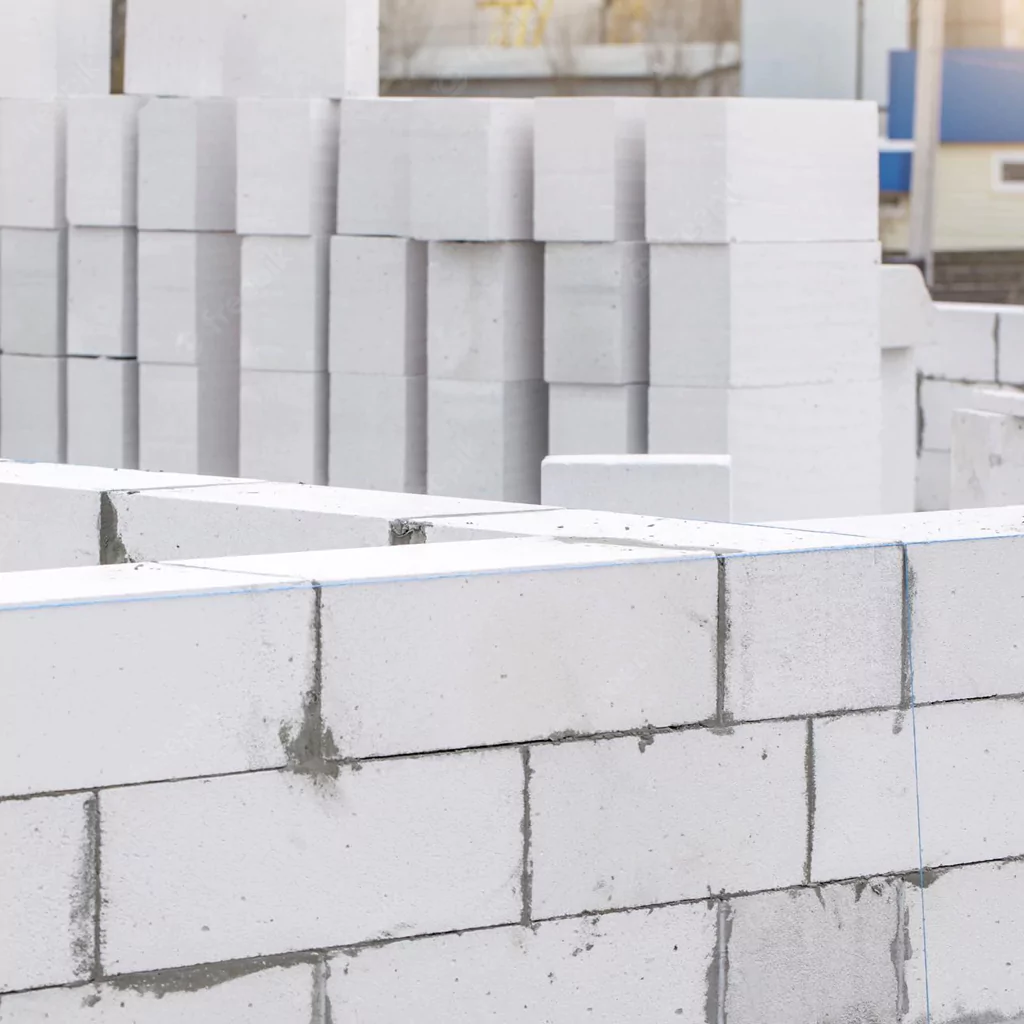
AAC blocks are manufactured to consistent dimensions. Joints stay thin. Surfaces stay flat. Electrical and plumbing chases can be cut cleanly with standard tools rather than chipped out manually. The finishing stage, which is where most projects quietly lose their schedule, becomes more predictable and more manageable.
For a contractor trying to hand over on time, that predictability is worth a great deal.
The straightforward case
Choosing AAC blocks is not about following a trend. This is about determining the actual functional requirements of the structure over its lifecycle and choosing a material that fulfills all these functions at its core.
Structural efficiency, thermal performance, fire resistance, soundproofing, and quickness of erection are not conflicting functions. AAC blocks fulfill all these criteria in one single product.
AAC blocks produced by Magna Green are made available to all housing, commercial, and institutional projects in Tamil Nadu through our plant in Karur. AAC blocks are reliable, their quality is guaranteed, and their performance on the field has proven this fact again and again.
The materials used within a building have a lasting impact beyond the construction phase. It is worth choosing them carefully.
Recent Posts